
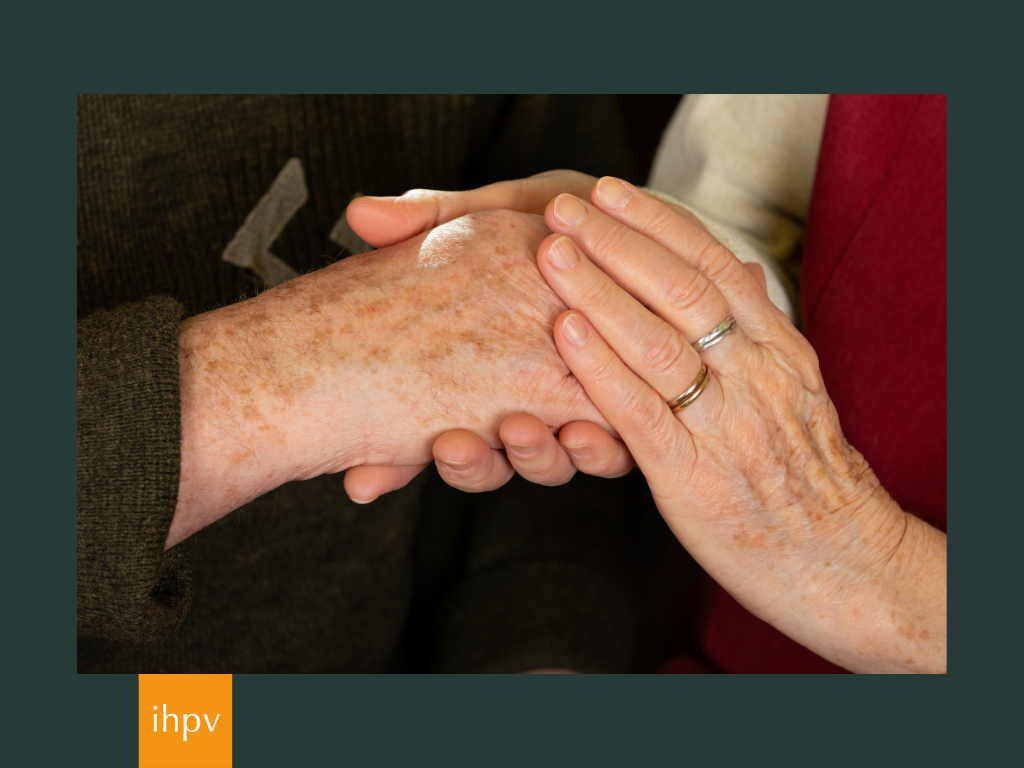
Envelhecimento Bem-Sucedido: O Papel de Suporte da Religiosidade
- 17 abril 2026
- 14:00
- Autora: Juliane Piasseschi de Bernardin Gonçalves
- Departamento de Psiquiatria da Faculdade de Medicina, Universidade de São Paulo, São Paulo, SP, Brasil. Gerente de Projetos do IHPV
Inúmeros fatores culturais, sociais e psicossociais influenciam a qualidade de um processo de envelhecimento (Rowe & Kahn, 1997). A religiosidade é um dos fatores que serve como um aliado desse processo, colaborando com a aquisição de hábitos saudáveis, como menos consumo de cigarro, álcool e outras drogas, alimentação balanceada, menos sintomas de depressão, ansiedade e solidão (Rodrigues et al., 2023).
A influência da religiosidade pode variar de acordo com o contexto cultural e com a intensidade do envolvimento religioso. Há ainda uma carência na compreensão desses aspectos em população brasileira de idosos. Isso é relevante pelo crescente número de pessoas acima de 60 anos, prospectado para ser 15,8% da população pelo censo brasileiro (IBGE, 2022). Compreender como múltiplos determinantes do envelhecimento bem-sucedido influenciam essa população, pode fortalecer estratégias púbicas de saúde. Além disso, pode agregar conhecimento para profissionais clínicos que atuam na área da geriatria quanto tratando seus pacientes.
Diante disso, um estudo na Faculdade de Medicina da Universidade de São Paulo investigou de forma abrangente as associações entre religiosidade e saúde funcional, mental, uso de substâncias, cognição e engajamento social entre idosos brasileiros, visando compreender como diferentes dimensões da religiosidade se relacionam com esses aspectos (Gonçalves et al., 2025).
O estudo avaliou idosos recrutados em unidades básicas de saúde da zona Oeste da cidade de São Paulo, originalmente desenhado para rastrear prevalência de depressão (Alexandrino-Silva et al., 2019). Foram coletados dados sociodemográficos, informações de saúde física e mental, comorbidades, função cognitiva e capacidade para realizar atividades da vida diária, além da afiliação religiosa, religiosidade organizacional, não organizacional e intrínseca.
Os resultados desse estudo podem ser encontrados na publicação (link).
Métodos
Os dados para esse estudo derivaram de um projeto observacional transversal amplo sobre saúde mental na atenção primária em idosos em São Paulo. Foram entrevistados em domicílio indivíduos acima de 60 anos e residentes da Zona Oeste da cidade de São Paulo. As entrevistas foram feitas por pesquisadores treinados com duração aproximada de 90 minutos (Alexandrino-Silva et al., 2019).
Foram excluídos indivíduos com declínio cognitivo grave (pontuação abaixo de 13 no Mini-Exame do Estado Mental) para garantir capacidade de responder aos questionários com precisão. Ao final, participaram 2,490 indivíduos do estudo.
Os instrumentos utilizados abrangeram variadas temáticas. A religiosidade foi avaliada através do instrumento chamado DUREL (Religious Duke Index), que menciona três dimensões diferentes: Religiosidade organizacional, não organizacional e intrínseca. A fim de mapear a associação entre religiosidade e envelhecimento bem-sucedido os desfechos foram divididos em três grupos principais:
- Envelhecimento Saudável: Incluiu percepção de saúde, saúde bucal, comorbidades autorreferidas, funcionalidade em atividades de vida diária, hábitos alimentares e uso de substâncias (álcool, tabaco e drogas ilícitas).
- Envelhecimento Ativo: Dados clínicos mensurados (PA, IMC, circunferência abdominal), uso de serviços de emergência ou internação no último ano, função cognitiva (MEEM) e saúde mental (depressão e ansiedade).
- Envelhecimento Produtivo: Participação em atividades de lazer social e prática de atividades físicas.
Foram realizados modelos de regressão logística para explorar as associações de cada religiosidade com cada agrupamento de envelhecimento. Posteriormente, foram criados agrupamentos dos determinantes de envelhecimento e ajustados os dados para variáveis sociodemográficas (sexo, idade, raça, estado civil, educação e status de trabalho).
Principais Resultados
A idade média da amostra foi de 69,6, sendo 62,7% mulheres, 63% católicos seguidos de 28,7% protestantes, e 33% apresentando depressão e 35% ansiedade. Os principais resultados mostraram uma associação positiva entre religiosidade e envelhecimento saudável, significando que indivíduos com níveis mais altos de religiosidade apresentaram melhores desfechos de envelhecimento saudável. Entretanto ao olhar as três dimensões separadamente, constaram-se algumas diferenças.
Referente a religiosidade organizacional, os achados mostraram menor uso de substâncias, melhor funcionalidade, menor utilização de serviços médicos de emergência, melhor desempenho cognitivo e maiores níveis de atividade física regular menor. Com relação a religiosidade intrínseca, encontrou-se um melhor estado de saúde geral, de saúde mental e de funcionalidade física, e menor uso de substâncias. Diferentemente, a religiosidade não organizacional não apresentou associações significativas com nenhum determinante de envelhecimento bem-sucedido.
Quando os 10 determinantes foram somados em um escore composto, observou-se que mais elevados de religiosidade organizacional e intrínseca estavam positivamente associados a melhor envelhecimento bem-sucedido.
Discussão
O estudo apontou que religiosidade está associada ao envelhecimento bem-sucedido, principalmente em determinantes individuais, como funcionalidade, saúde mental e cognição. Essas associações foram estatisticamente significativas para a religiosidade organizacional e intrínseca, mas não para a não organizacional. Os resultados corroboram com pesquisas anteriores realizadas no Brasil (Salamene et al., 2021), Chile (Gallardo-Peralta et al., 2017) e Espanha (Gutiérrez et al., 2018), que também destacaram a espiritualidade como um fator central para o envelhecimento bem-sucedido, muitas vezes negligenciado ou considerado o “fator esquecido” nos modelos tradicionais (Crowther et al., 2002).
No que diz respeito aos mecanismos da religiosidade organizacional, esta dimensão mostrou-se a mais relevante, influenciando cinco dos dez determinantes de envelhecimento bem-sucedido analisados. É provável que a frequência a templos promove redes de suporte social que reduzem a solidão e incentivam o engajamento ativo na vida. Além disso, a participação em grupos religiosos pode prevenir o declínio cognitivo ao oferecer estimulação sensorial e social (Lapane et al., 2022; Lim & Putnam, 2010). É possível também que essa rede de apoio incentive comportamentos preventivos e a adesão a consultas e atendimentos médicos, o que reduz a necessidade de utilização de serviços de emergência.
Quanto à religiosidade intrínseca, observou-se associação com quatro dos dez determinantes de envelhecimento bem-sucedido. Esse tipo de religiosidade mais ligada à fé, fornece otimismo, senso de propósito e significado, fatores que são essenciais para a saúde mental e funcionalidade durante o processo de envelhecimento (Green & Elliott, 2010). Sugere-se ainda que a associação com um melhor estado de saúde geral ocorra porque esses idosos tendem a cuidar mais de si mesmos, motivados pela crença de que a manutenção do corpo é uma forma de prática espiritual ou o cuidado com um “presente sagrado”.
Por fim, o estudo não detectou associações entre a religiosidade não organizacional, como a oração privada e leitura de textos sagradas, e os determinantes de envelhecimento bem-sucedido. Um potencial explicação é a bidirecionalidade: embora a oração possa trazer benefícios, pessoas doentes ou com mobilidade limitada podem rezar com mais frequência para lidar com seus problemas de saúde, o que pode anular associações positivas em estudos de corte transversal (Ai et al., 2020). Dessa forma, os dados indicam que os idosos parecem se beneficiar mais da interação social proporcionada pelos grupos religiosos do que da prática religiosa isolada para desfechos como depressão e fragilidade.
Implicações Clínicas
As implicações para a prática clínica destacam que a religiosidade desempenha um papel significativo nos desfechos de saúde de idosos, sugerindo que profissionais de saúde devem adotar uma abordagem holística ao considerar as crenças religiosas dos pacientes na elaboração de planos de tratamento físico e mental. Dado que a religiosidade organizacional foi vinculada à melhor funcionalidade e redução do uso de substâncias, intervenções baseadas na comunidade e em grupos de apoio ligados à fé podem ser recomendadas para combater a solidão e promover a atividade física. Além disso, a personalização do cuidado é fundamental, pois compreender o perfil religioso e a religiosidade intrínseca do paciente permite que médicos incentivem a adesão terapêutica, escolhas de estilo de vida mais saudáveis e estratégias de enfrentamento para condições como ansiedade e depressão.
Limitações
Em relação às limitações e perspectivas futuras, o delineamento transversal do estudo é um fator importante, pois identifica associações, mas não permite estabelecer uma relação de causalidade entre a religiosidade e o envelhecimento bem-sucedido. A generalização dos resultados deve ser feita com cautela, uma vez que os dados foram coletados em uma região específica de São Paulo e o estudo excluiu indivíduos com comprometimento cognitivo severo, limitando os achados àqueles com melhor status cognitivo. Por fim, há uma clara necessidade de estudos longitudinais que acompanhem os idosos ao longo do tempo para investigar o comportamento dos determinantes do envelhecimento bem-sucedido em diferentes afiliações religiosas e em sociedades mais seculares.
Referências
Ai, A. L., Peterson, C., Koenig, H., Paloutzian, R. F., & Harris, K. A. (2020). Using Private Prayer for Coping (UPPC): Its role and mechanisms in adversities facing diverse populations. In Assessing Spirituality in a Diverse World. https://doi.org/10.1007/978-3-030-52140-0_10
Alexandrino-Silva, C., Ribeiz, S. R., Frigerio, M. B., Bassolli, L., Alves, T. F., Busatto, G., & Bottino, C. (2019). Prevention of depression and anxiety in community-dwelling older adults: the role of physical activity. Archives of Clinical Psychiatry (São Paulo), 46(1), 14–20. https://doi.org/10.1590/0101-60830000000185
Crowther, M. R., Parker, M. W., Achenbaum, W. A., Larimore, W. L., & Koenig, H. G. (2002). Rowe and Kahn’s model of successful aging revisited: positive spirituality–the forgotten factor. The Gerontologist, 42(5), 613–620. https://doi.org/10.1093/GERONT/42.5.613
Gallardo-Peralta, L., Cuadra-Peralta, A., Cámara-Rojo, X., Gaspar-Delpino, B., & Sánchez-Lillo, R. (2017). Validación del inventario de envejecimiento exitoso en personas mayores chilenas. Revista Medica de Chile, 145(2). https://doi.org/10.4067/S0034-98872017000200004
Gonçalves, J. P. de B., Vallada, H., Rose Ribeiz, S., Busatto, G., & Lucchetti, G. (2025). Associations between religiousness and the determinants of successful aging among 2,490 Brazilian community-dwelling older adults. Aging & Mental Health, 29(11), 2067–2078. https://doi.org/10.1080/13607863.2025.2523474
Green, M., & Elliott, M. (2010). Religion, health, and psychological well-being. Journal of Religion and Health, 49(2). https://doi.org/10.1007/s10943-009-9242-1
Gutiérrez, M., Tomás, J. M., & Calatayud, P. (2018). Contributions of Psychosocial Factors and Physical Activity to Successful Aging. The Spanish Journal of Psychology, 21. https://doi.org/10.1017/sjp.2018.27
IBGE, C. (2022). Censo 2022: número de pessoas com 65 anos ou mais de idade cresceu 57,4% em 12 anos. https://agenciadenoticias.ibge.gov.br/agencia-noticias/2012-agencia-de-noticias/noticias/38186-censo-2022-numero-de-pessoas-com-65-anos-ou-mais-de-idade-cresceu-57-4-em-12-anos
Lapane, K. L., Lim, E., McPhillips, E., Barooah, A., Yuan, Y., & Dube, C. E. (2022). Health effects of loneliness and social isolation in older adults living in congregate long term care settings: A systematic review of quantitative and qualitative evidence. In Archives of Gerontology and Geriatrics (Vol. 102). https://doi.org/10.1016/j.archger.2022.104728
Lim, C., & Putnam, R. D. (2010). Religion, social networks, and life satisfaction. American Sociological Review, 75(6). https://doi.org/10.1177/0003122410386686
Rodrigues, C. E., Grandt, C. L., Alwafa, R. A., Badrasawi, M., & Aleksandrova, K. (2023). Determinants and indicators of successful aging as a multidimensional outcome: a systematic review of longitudinal studies. Frontiers in Public Health, 11, 1258280. https://doi.org/10.3389/FPUBH.2023.1258280/FULL
Rowe, J. W., & Kahn, R. L. (1997). Successful Aging. The Gerontologist, 37(4), 433–440. https://doi.org/10.1093/GERONT/37.4.433
Salamene, L. C., Martins, E. L. M., Lucchetti, G., & Lucchetti, A. L. G. (2021). Factors associated with successful aging in Brazilian community-dwelling older adults: When physical health is not enough. Geriatric Nursing, 42(2), 372–378. https://doi.org/https://doi.org/10.1016/j.gerinurse.2021.01.009
Successful Aging: The Supportive Role of Religiousness
Several cultural, social, and psychosocial factors influence the quality of the aging process (Rowe & Kahn, 1997). Religiousness is one factor that serves as an ally in this process, contributing to the acquisition of healthy habits, such as reduced consumption of cigarettes, alcohol, and other drugs, a balanced diet, and fewer symptoms of depression, anxiety, and loneliness (Rodrigues et al., 2023).
The influence of religiousness can vary according to cultural context and the intensity of religious involvement. There is still a lack of understanding regarding these aspects in the Brazilian elderly population. This is relevant due to the growing number of people over age 60, which represents 9.6% of the population according to the 2010 Brazilian census (IBGE, 2022). Understanding how multiple determinants of successful aging (SA) influence this population can strengthen public health strategies. Furthermore, it can provide valuable knowledge for clinical professionals working in geriatrics when treating their patients.
Given this, a study at the University of São Paulo Medical School comprehensively investigated the associations between religiousness and functional health, mental health, substance use, cognition, and social engagement among Brazilian older adults, aiming to understand how different dimensions of religiousness relate to these aspects (Gonçalves et al., 2025).
The study evaluated older adults recruited from primary care facilities in the Western region of the city of São Paulo, originally designed to screen for the prevalence of depression (Alexandrino-Silva et al., 2019). Sociodemographic data, physical and mental health information, comorbidities, cognitive function, and the ability to perform daily living activities were collected, in addition to religious affiliation and organizational, non-organizational, and intrinsic religiousness.
The results of this study can be found in the scientific publication.
Methods
The data for this study derived from a broad cross-sectional observational project on mental health in primary care among older adults in São Paulo. Individuals over 60 years old residing in the Western Zone of the city of São Paulo were interviewed at home. The interviews were conducted by trained researchers and lasted approximately 90 minutes (Alexandrino-Silva et al., 2019).
Individuals with severe cognitive decline (score below 13 on the Mini-Mental State Examination) were excluded to ensure the ability to answer the questionnaires accurately. In the end, 2,490 individuals participated in the study.
The instruments used covered various themes. Religiousness was evaluated using the DUREL (Duke Religion Index) instrument, which mentions three different dimensions: organizational, non-organizational, and intrinsic religiousness. To map the association between religiousness and successful aging, the outcomes were divided into three main groups:
- Healthy Aging: Included health perception, oral health, self-reported comorbidities, functionality in activities of daily living, dietary habits, and substance use (alcohol, tobacco, and illicit drugs).
- Active Aging: Measured clinical data (blood pressure, BMI, abdominal circumference), use of emergency services or hospitalization in the last year, cognitive function (MMSE), and mental health (depression and anxiety).
- Productive Aging: Participation in social leisure activities and the practice of physical activities.
Logistic regression models were performed to explore the associations of each type of religiousness with each aging group. Subsequently, groupings of aging determinants were created, and the data were adjusted for sociodemographic variables (sex, age, race, marital status, education, and work status).
Main Results
The mean age of the sample was 69.6, with 62.7% being women, 63% Catholics followed by 28.7% Protestants, and 33% presenting depression and 35% anxiety. The main results showed a positive association between religiousness and healthy aging, meaning that individuals with higher levels of religiousness showed better successful aging outcomes. However, when looking at the three dimensions separately, some differences were noted.
Regarding organizational religiousness, the findings showed lower substance use, better functionality, lower use of emergency medical services, better cognitive performance, and higher levels of regular physical activity. Regarding intrinsic religiousness, better general health, mental health, and physical functionality were found, along with lower substance use. In contrast, non-organizational religiousness did not show significant associations with any determinant of successful aging.
When the 10 determinants were summed into a composite score, it was observed that higher levels of organizational and intrinsic religiousness were positively associated with better successful aging.
Discussion
The study indicated that religiousness is associated with successful aging, mainly in individual determinants such as functionality, mental health, and cognition. These associations were statistically significant for organizational and intrinsic religiousness, but not for non-organizational religiousness. The results corroborate previous research conducted in Brazil (Salamene et al., 2021), Chile (Gallardo-Peralta et al., 2017), and Spain (Gutiérrez et al., 2018), which also highlighted spirituality as a central factor for successful aging, often neglected or considered the “forgotten factor” in traditional models (Crowther et al., 2002).
Regarding the mechanisms of organizational religiousness, this dimension proved to be the most relevant, influencing five of the ten successful aging determinants analyzed. It is likely that attendance at temples promotes social support networks that reduce loneliness and encourage active engagement in life. Furthermore, participation in religious groups can prevent cognitive decline by offering sensory and social stimulation (Lapane et al., 2022; Lim & Putnam, 2010). It is also possible that this support network encourages preventive behaviors and adherence to medical consultations and care, which reduces the need for emergency services.
Regarding intrinsic religiousness, an association was observed with four of the ten successful aging determinants. This type of religiousness, more linked to faith, provides optimism, a sense of purpose, and meaning, factors that are essential for mental health and functionality during the aging process (Green & Elliott, 2010). It is further suggested that the association with better general health status occurs because these older adults tend to take better care of themselves, motivated by the belief that maintaining the body is a form of spiritual practice or care for a “sacred gift”.
Finally, the study did not detect associations between non-organizational religiousness, such as private prayer and reading sacred texts, and successful aging determinants. A potential explanation is bidirectionality: although prayer can bring benefits, people who are ill or have limited mobility may pray more frequently to cope with their health problems, which can cancel out positive associations in cross-sectional studies (Ai et al., 2020). Thus, the data indicate that the elderly seem to benefit more from the social interaction provided by religious groups than from isolated religious practice for outcomes such as depression and frailty.
Clinical Implications
The implications for clinical practice highlight that religiousness plays a significant role in health outcomes for the elderly, suggesting that healthcare professionals should adopt a holistic approach by considering patients’ religious beliefs when developing physical and mental treatment plans. Since organizational religiousness was linked to better functionality and reduced substance use, community-based interventions and faith-based support groups can be recommended to combat loneliness and promote physical activity. Furthermore, personalization of care is fundamental, as understanding the patient’s religious profile and intrinsic religiousness allows doctors to encourage therapeutic adherence, healthier lifestyle choices, and coping strategies for conditions such as anxiety and depression.
Limitations
Regarding limitations and future perspectives, the cross-sectional design of the study is an important factor, as it identifies associations but does not allow for the establishment of a causal relationship between religiousness and successful aging. Generalization of the results should be done with caution, since the data were collected in a specific region of São Paulo and the study excluded individuals with severe cognitive impairment, limiting the findings to those with better cognitive status. Finally, there is a clear need for longitudinal studies that follow the elderly over time to investigate the behavior of successful aging determinants across different religious affiliations and in more secular societies.
References
Ai, A. L., Peterson, C., Koenig, H., Paloutzian, R. F., & Harris, K. A. (2020). Using Private Prayer for Coping (UPPC): Its role and mechanisms in adversities facing diverse populations. In Assessing Spirituality in a Diverse World. https://doi.org/10.1007/978-3-030-52140-0_10
Alexandrino-Silva, C., Ribeiz, S. R., Frigerio, M. B., Bassolli, L., Alves, T. F., Busatto, G., & Bottino, C. (2019). Prevention of depression and anxiety in community-dwelling older adults: the role of physical activity. Archives of Clinical Psychiatry (São Paulo), 46(1), 14–20. https://doi.org/10.1590/0101-60830000000185
Crowther, M. R., Parker, M. W., Achenbaum, W. A., Larimore, W. L., & Koenig, H. G. (2002). Rowe and Kahn’s model of successful aging revisited: positive spirituality–the forgotten factor. The Gerontologist, 42(5), 613–620. https://doi.org/10.1093/GERONT/42.5.613
Gallardo-Peralta, L., Cuadra-Peralta, A., Cámara-Rojo, X., Gaspar-Delpino, B., & Sánchez-Lillo, R. (2017). Validación del inventario de envejecimiento exitoso en personas mayores chilenas. Revista Medica de Chile, 145(2). https://doi.org/10.4067/S0034-98872017000200004
Gonçalves, J. P. de B., Vallada, H., Rose Ribeiz, S., Busatto, G., & Lucchetti, G. (2025). Associations between religiousness and the determinants of successful aging among 2,490 Brazilian community-dwelling older adults. Aging & Mental Health, 29(11), 2067–2078. https://doi.org/10.1080/13607863.2025.2523474
Green, M., & Elliott, M. (2010). Religion, health, and psychological well-being. Journal of Religion and Health, 49(2). https://doi.org/10.1007/s10943-009-9242-1
Gutiérrez, M., Tomás, J. M., & Calatayud, P. (2018). Contributions of Psychosocial Factors and Physical Activity to Successful Aging. The Spanish Journal of Psychology, 21. https://doi.org/10.1017/sjp.2018.27
IBGE, C. (2022). Censo 2022: número de pessoas com 65 anos ou mais de idade cresceu 57,4% em 12 anos. https://agenciadenoticias.ibge.gov.br/agencia-noticias/2012-agencia-de-noticias/noticias/38186-censo-2022-numero-de-pessoas-com-65-anos-ou-mais-de-idade-cresceu-57-4-em-12-anos
Lapane, K. L., Lim, E., McPhillips, E., Barooah, A., Yuan, Y., & Dube, C. E. (2022). Health effects of loneliness and social isolation in older adults living in congregate long term care settings: A systematic review of quantitative and qualitative evidence. In Archives of Gerontology and Geriatrics (Vol. 102). https://doi.org/10.1016/j.archger.2022.104728
Lim, C., & Putnam, R. D. (2010). Religion, social networks, and life satisfaction. American Sociological Review, 75(6). https://doi.org/10.1177/0003122410386686
Rodrigues, C. E., Grandt, C. L., Alwafa, R. A., Badrasawi, M., & Aleksandrova, K. (2023). Determinants and indicators of successful aging as a multidimensional outcome: a systematic review of longitudinal studies. Frontiers in Public Health, 11, 1258280. https://doi.org/10.3389/FPUBH.2023.1258280/FULL
Rowe, J. W., & Kahn, R. L. (1997). Successful Aging. The Gerontologist, 37(4), 433–440. https://doi.org/10.1093/GERONT/37.4.433
Salamene, L. C., Martins, E. L. M., Lucchetti, G., & Lucchetti, A. L. G. (2021). Factors associated with successful aging in Brazilian community-dwelling older adults: When physical health is not enough. Geriatric Nursing, 42(2), 372–378. https://doi.org/https://doi.org/10.1016/j.gerinurse.2021.01.009